

Chiaroscuro
Before photography. Before cinema. Before screens. There was a painter in a darkened studio, a single candle, and a decision: where does the light fall, and where does the darkness begin?
That decision — repeated across centuries, across cultures, across media — gave us one of the most powerful visual languages ever developed. It is called chiaroscuro. And once you understand it, you will never look at a painting, a photograph, or a room in quite the same way again.

What Is Chiaroscuro?
The word itself is Italian — a marriage of chiaro (light, clear) and scuro (dark, obscure). In art, it refers to the deliberate use of strong contrasts between light and shadow to give the illusion of three-dimensional volume on a flat surface.
But chiaroscuro is more than a technique. It is a philosophy of seeing. It asks: what do you choose to illuminate, and what do you allow to remain in shadow? The answer reveals not just a form on canvas — it reveals a worldview.
"A painter who knows how to use light and shadow as instruments of expression has mastered something close to the nature of perception itself."

From Ancient Walls to Renaissance Studios
The instinct to model form with light and shadow is ancient. Greek and Roman painters employed early versions of this technique — applying lighter pigment to raised surfaces and darker tones to recesses, giving their figures a sculptural presence that jumped off the wall.
But it was during the Italian Renaissance that chiaroscuro was transformed into a fully conscious, masterfully controlled tool. Leonardo da Vinci brought extraordinary refinement to the technique, developing sfumato — a softened, smoky transition between light and shadow that gave his figures their haunting, atmospheric quality. Study the face of the Mona Lisa closely: there are no hard lines, only gradations of tone so subtle they seem to breathe.

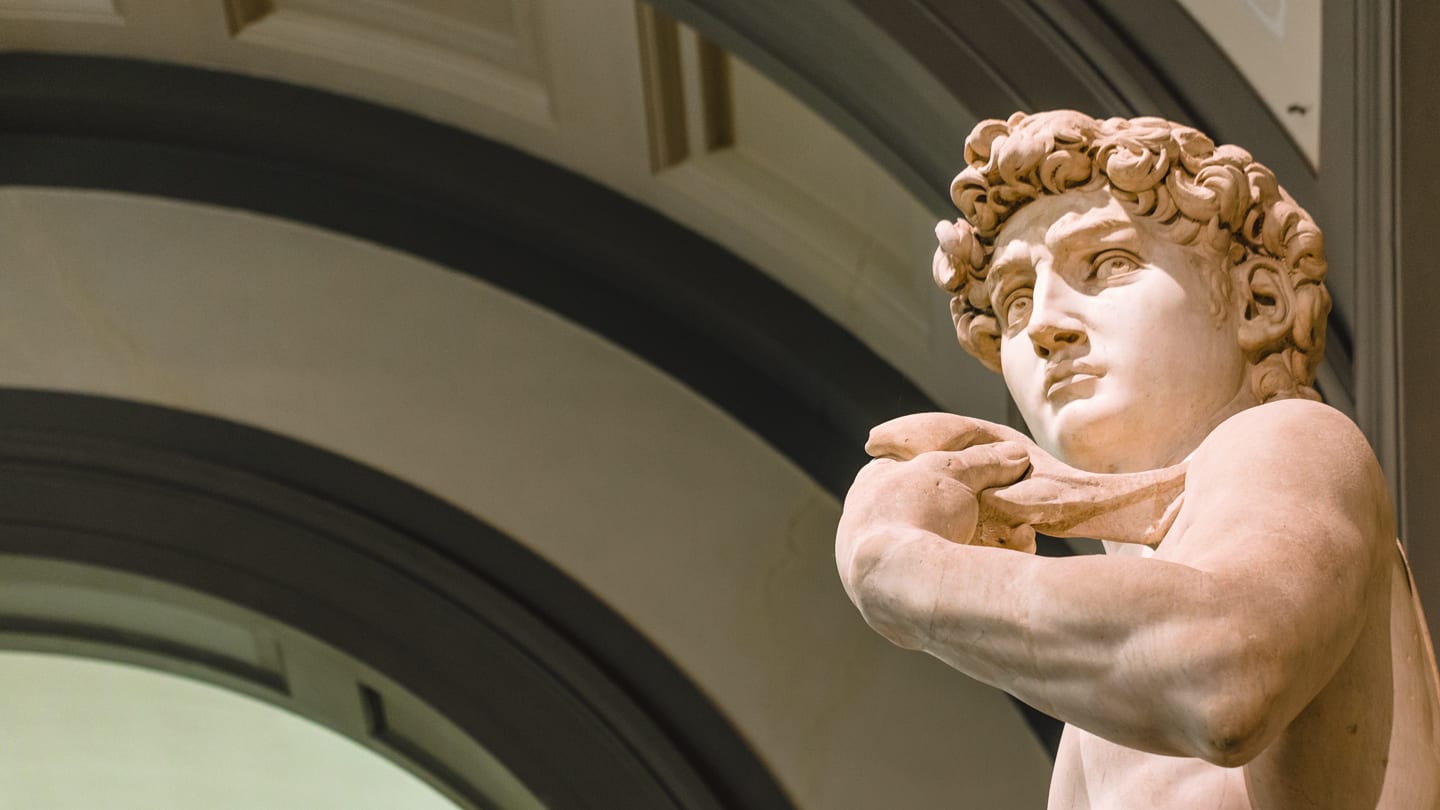
Michelangelo took a different path. His chiaroscuro is architectural — bold, muscular, carved from light as if his figures were sculptures emerging from the canvas. In the Sistine Chapel ceiling, shadow defines the depth of a muscle, the weight of a gesture, the gravity of a divine moment.
Caravaggio and the Revolution of Tenebrism
If Leonardo refined chiaroscuro into a whisper, Caravaggio turned it into a thunderclap.
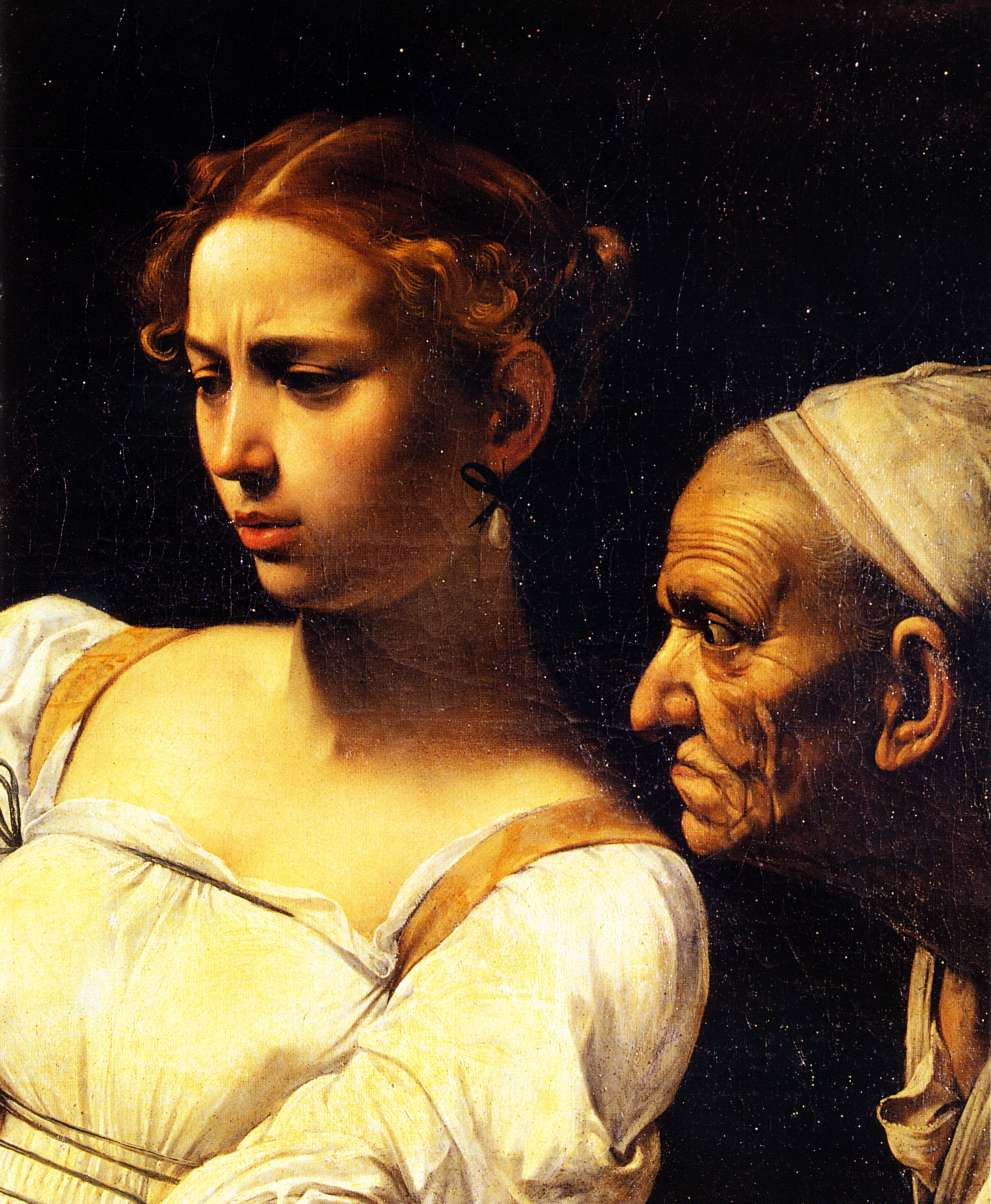
Working in Rome in the late sixteenth century, Michelangelo Merisi da Caravaggio developed a radical approach now called tenebrism — from the Italian tenebroso, meaning dark or gloomy. In his paintings, figures emerge violently from near-total darkness, lit by a single, concentrated source of light. There is no gradual atmospheric transition. There is only the brutality of illumination against the void.
The effect is visceral. It does not invite contemplation — it demands presence. You do not look at a Caravaggio from a comfortable distance. You are pulled into it, made to feel the weight of the drama unfolding in that sliver of light.
His influence spread rapidly across Europe. Artemisia Gentileschi, Rembrandt van Rijn, Georges de La Tour — each absorbed the lesson of Caravaggio and made it their own. In the hands of Rembrandt, chiaroscuro became introspective and tender, a means of illuminating the inner life of his subjects as much as their faces.
Why Our Eyes Are Drawn to the Light
The power of chiaroscuro is not merely aesthetic — it is neurological. The human visual system evolved in a world where contrast meant information. A shadow on the ground could mean a predator. A lit opening in the forest could mean escape. We are wired to pay attention to the boundary between light and dark.
Artists who understand this are not decorating a surface. They are hacking perception itself. When a painter places a bright highlight on a forehead emerging from shadow, they are exploiting the same mechanism your brain uses to detect depth in the physical world. The form feels real because your nervous system is responding to it as if it were.
Chiaroscuro Beyond Painting: Film, Photography, and Architecture
The logic of chiaroscuro did not stay confined to canvas. When photography emerged in the nineteenth century, the great portrait photographers immediately understood that light and shadow were their primary materials. The difference between a snapshot and a portrait — a document and a work of art — is almost entirely a question of how light falls.

Cinema carried the tradition further. The directors of German Expressionism in the 1920s — F.W. Murnau, Fritz Lang — used extreme chiaroscuro to create worlds of psychological menace. Their visual language flowed directly into film noir, and from film noir into the entire grammar of cinematic tension we still recognize today.
The Third Man (1949) — Chiaroscuro on Screen
Carol Reed's The Third Man is perhaps the purest expression of chiaroscuro in the history of cinema. Shot in the bombed-out streets of postwar Vienna, cinematographer Robert Krasker tilted his camera at unsettling angles and flooded the frame with extreme pools of light against absolute darkness — a technique so radical it won the Academy Award for Best Cinematography.
Every shadow in the film is a moral statement. The villain, Harry Lime, is introduced not as a face but as a pair of shoes caught in a shaft of light — darkness withholding information, making the audience lean forward. When he finally appears in a doorway, illuminated for just a moment before the darkness reclaims him, it is one of the most Caravaggesque shots in film history.
Reed and Krasker did not invent this language. They inherited it — directly from the German Expressionist directors of the 1920s, who had inherited it from Rembrandt, who had inherited it from Caravaggio. The Third Man is, among other things, proof that a visual idea powerful enough can survive five centuries without losing a single volt of its charge.
In architecture and interior design, the same principles apply. A room lit only from one direction creates volume, atmosphere, and drama. A room lit from everywhere flattens to nothing. The most thoughtfully designed spaces — from Baroque chapels to contemporary galleries — use light not as illumination but as material: something sculpted, directed, and withheld.
Bringing Chiaroscuro Into Your Space
One of the most overlooked qualities of great wall art is how it responds to light. A flat printed image looks the same whether the room is brightly lit or dim. It does not participate in the atmosphere of the space — it merely occupies it.
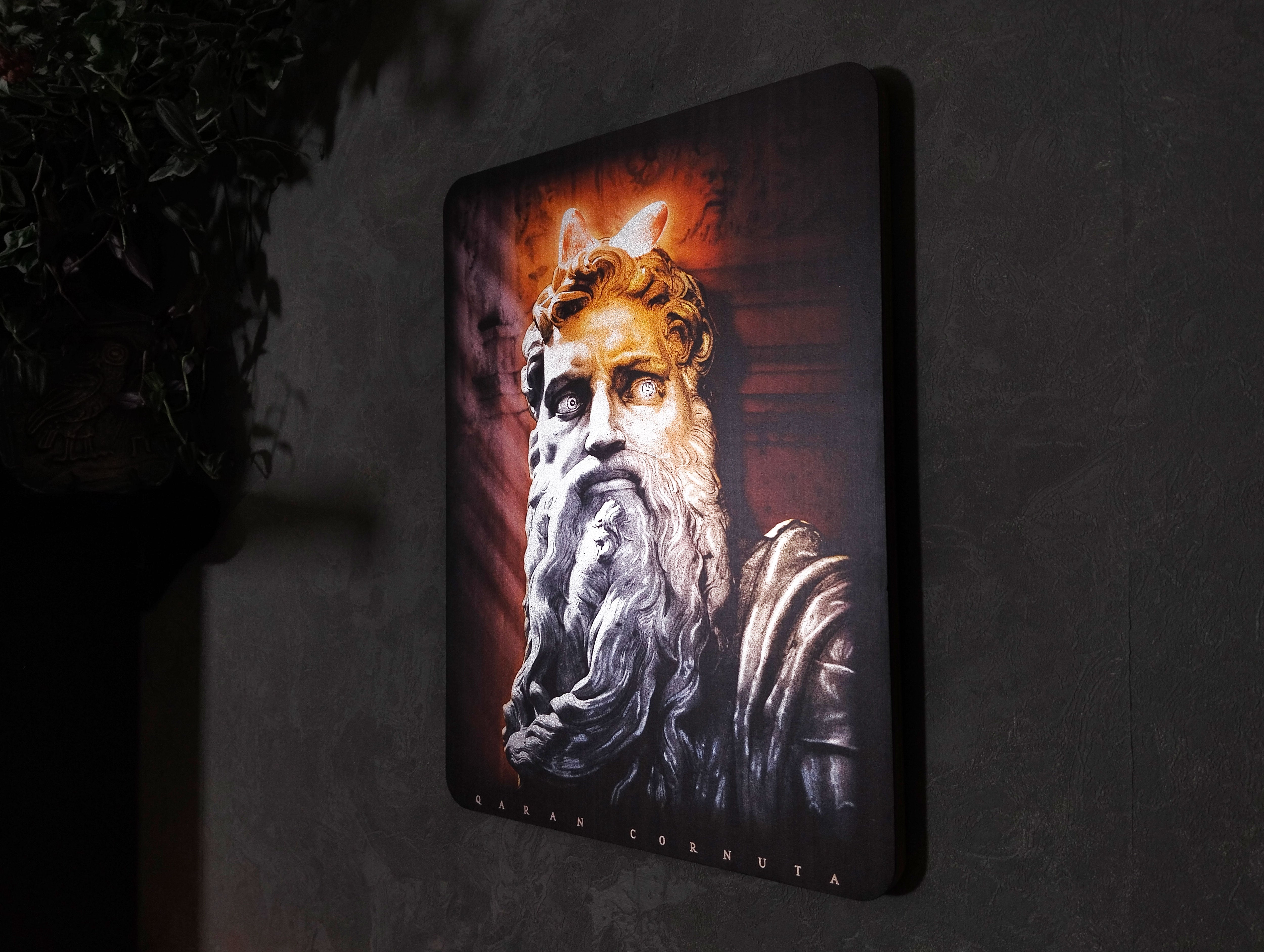
A surface with genuine physical texture behaves differently. It catches directional light. It creates micro-shadows along its raised areas. It shifts as the quality of light in the room changes — morning sun giving way to afternoon warmth, artificial light in the evening casting differently than natural light at noon. The artwork becomes a living element of the space rather than a fixed decoration.
This is what drew us, at Wallupin, to the Silver-Lit technique. Hand-applied metallic leaf does not simply reflect light — it intercepts it, redirects it, creates depth within a surface that is physically only millimetres thick. The result is an object that behaves, in its modest way, according to the same principles that Caravaggio understood: that drama is not in the image alone, but in the relationship between the image and the light that reveals it.
"Walk past it slowly. Keep looking. It will glow for you."
Five Masters of Chiaroscuro Worth Knowing
Leonardo da Vinci (1452–1519)
The architect of sfumato, whose soft transitions between light and shadow remain unmatched in their subtlety. Begin with The Virgin of the Rocks.
Caravaggio (1571–1610)
The revolutionary who made darkness as expressive as light. His Judith Beheading Holofernes demonstrates tenebrism at its most confrontational.
Rembrandt van Rijn (1606–1669)
The master of psychological chiaroscuro. His self-portraits track an entire lifetime through the shifting quality of light on a single face.

Artemisia Gentileschi (1593–c.1656)
One of the first female artists to achieve recognition in a male-dominated field, and among the most powerful practitioners of Caravaggesque chiaroscuro.

Francisco de Goya (1746–1828)
In his late Black Paintings, Goya stripped chiaroscuro to its existential core — light as the last fragment of reason against consuming darkness.
The Enduring Grammar of Light
Chiaroscuro has survived every shift in artistic style for five hundred years because it is not a style — it is a structural truth about how human beings perceive form and meaning. We are drawn to the lit thing in the darkness. We read depth in the shadow. We feel emotion in the contrast.
When you next stand in front of a painting that stops you — that makes you feel, without knowing quite why, that you are looking at something real — look for the light source. Find where the shadows begin. Trace the edge between illumination and obscurity. You will almost certainly find there a deliberate, considered act of chiaroscuro at work.
That act connects you, directly, to Leonardo's candlelit studio. To Caravaggio's calculated darkness. To Rembrandt painting himself, one more time, in the fading afternoon light.
Five centuries. One unbroken conversation between light, shadow, and the human eye.
Experience Chiaroscuro in Your Own Space
At Wallupin, we create collectible wall artworks that bring the principles of classical chiaroscuro into contemporary interiors. Each piece is produced using the Silver-Lit technique — hand-applied metallic leaf combined with UV-transferred graphic design on 18mm birch plywood — creating a surface that responds dynamically to the light in your space.
Our Silver-Lit Re-Forms collection draws directly from the sculptural heritage of Greece and Rome — the same figural tradition that informed Caravaggio, Michelangelo, and the masters of the Renaissance. These are not prints. They are objects: physical, luminous, designed to be lived with.
Explore the Silver-Lit Re-Forms Collection at wallupin.com
Each piece is a limited studio edition — individually produced, not mass manufactured.
Worldwide free shipping. Delivered safely to collectors everywhere.

© 2026 Wallupin Studio — wallupin.com · Written by Mete Oguz
Share:
1 comment
Light and shadow, but so much more than that. Really well explained.